


Philippines
Over 7,600 islands, some of the best diving on earth, and beaches that still feel discovered by accident rather than algorithm. Southeast Asia’s most underrated destination for anyone willing to work slightly harder to get there.
Two to three weeks is the workable minimum for the Philippines: enough time to properly cover one region, Palawan or the Visayas, without losing days to inter-island flights and ferries.
Pack Lightly editorial team
At a glance
- Friendliness scores 95 and nature 90, backed up by strong active-vacation and budget marks. Few countries in Asia combine warmth and raw scenery this consistently.
- Budget around $25 a day backpacking, $55 mid-range. Accommodation and food move the total most, and inter-island flights are the line item that catches people off guard.
- December through April is the dry season, with January through March the most comfortable stretch. Siargao runs on its own calendar: surf peaks September through November.
- Two weeks covers one main region well, either Palawan or the Visayas. A month lets you cover both without rushing between islands.
- The catch: infrastructure and safety both sit under 65, inter-island transit eats real time and money, and June through October is typhoon season across most of the islands.
Everything to know before you book
The essentials for a Philippines trip: visa, money, climate window and power, in one scan.
What the Philippines is, and isn’t
Ten categories scored 0-100 from tourism data, traveler reports and on-the-ground experience.
Friendliness leads by a wide margin, and nature and budget scores back it up. Step off Boracay’s main strip and the islands still feel personal, not packaged.
Infrastructure and safety both sit under 65. Inter-island transit eats real time and money, and petty theft is the actual risk, not violent crime.
Best places to visit in the Philippines
Eight destinations that anchor most trips. Filter by island group to plan your route.
El Nido
Limestone cliffs, turquoise lagoons and Bacuit Bay’s island-hopping tours. The reason most Philippines trips start here.Boracay
White Beach ranks among the finest in Asia. Visit outside peak season and it earns the reputation without the crowds.Siargao
The Cloud 9 break, coconut-lined roads and an island scene that has kept its slow pace despite the attention.Manila
Intramuros, a relentless food scene and the chaos that makes Southeast Asian capitals worth a day or two.Coron
World War II wrecks and crystal lakes in a corner of Palawan that still feels largely untouched.Bohol
The Chocolate Hills, tarsiers, and some of the calmest dive sites anywhere in the Visayas.Sagada
Hanging coffins, cave systems and cool mountain air a world away from the beach crowds.Batanes
Rolling hills, stone houses and an archipelago that looks nothing like the rest of the Philippines.Northern & Central Luzon
Southern Luzon & Bicol
Visayas
Palawan
Mindanao
All Philippines guides
Every Pack Lightly guide for planning, preparing and exploring the Philippines.
Planning & Logistics
Practical & Preparation
Philippines: Full Travel Breakdown
Islands, visa, budget, and which regions are actually worth your time, all in one podcast-style breakdown


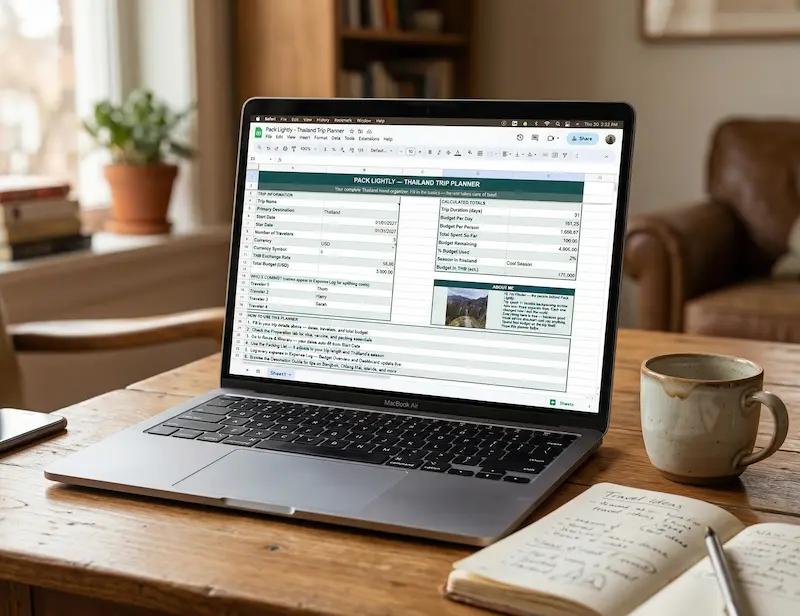
Plan your Philippines trip
A free Google Sheets template: itinerary planning, daily expenses, budget tracking and a packing list, with a dashboard that updates as you go.
Get the Free TemplateWhat the Philippines costs per day
Per person per day in USD, drawn from the Pack Lightly budget calculator. Accommodation and food move the total most.
Philippines, month by month
Manila temperature (°F) and rainfall (inches). Averaged from 2021-2023 records.
Philippines in one first impression
A quick sweep of the country before you plan the trip.

What if…
Philippines by trip length
Real day-by-day itineraries, one for each trip length. Pick the time you have and open the full plan.
Feel the vibrant pulse of Cebu City as you dive into its bustling street food scene, then transition to the serene landscapes of Bohol Countryside where the Chocolate Hills rise like chocolate mounds against a blue sky.
See the full day-by-day planFeel the heat of Cebu City as you explore its bustling markets, then transition to the lush landscapes of Bohol, where the Chocolate Hills rise like giant green mounds.
See the full day-by-day planExperience the vibrant chaos of Manila’s street food markets, then transition to the serene rice terraces of Banaue.
See the full day-by-day planFeel the pulse of Manila’s bustling streets as you transition to the serene landscapes of El Nido. The vibrant street food markets and historic Intramuros contrast sharply with the tranquil turquoise waters and limestone cliffs of Palawan.
See the full day-by-day plan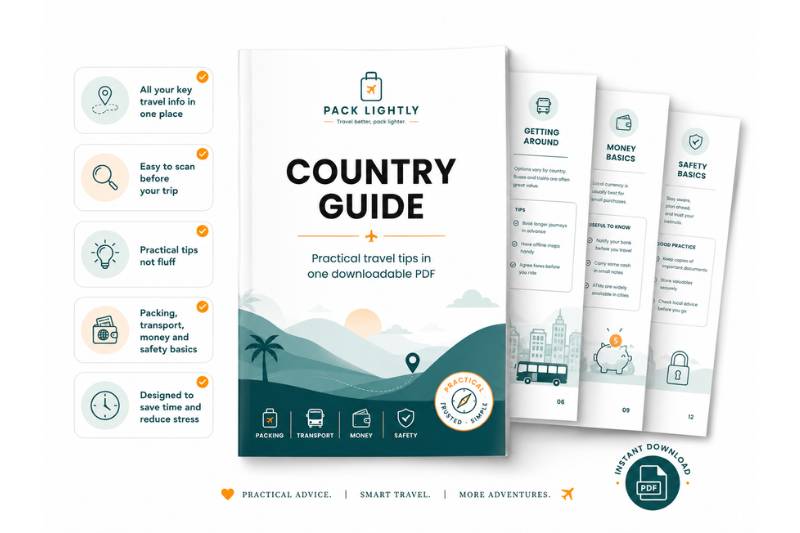
Take the whole Philippines guide offline
Every practical decision for the Philippines sits in one PDF: what a day costs, when to go, how El Nido, Boracay and Siargao fit into one trip, and what to book before you leave.
- Routes that hold up: route options from 7 to 28 days, with the stops worth the travel time and the ones worth skipping.
- Real numbers: daily budgets from $25 to $150 per person, split over beds, food, transport and activities.
- Weather, crowds and price: which months are dry, which are cheap, and where the two overlap.
- The practical layer: money, transport, connectivity, safety and the local etiquette that saves you a misstep.
Opens the PDF straight away. Save it to your phone and it works offline.
Book your Philippines trip
Everything to sort before departure, at the same price as booking direct. It helps keep these guides free.
Before you commit
Why the Philippines works
Few countries match the archipelago for sheer natural range. Coral systems in Tubbataha, wrecks in Coron, whale sharks off Donsol, thresher sharks at Malapascua: the underwater world alone is worth the flight. Above water, the Bacuit Archipelago around El Nido rivals anything else in Southeast Asia.
English is widely spoken, which removes most friction fast. Budget travelers can eat and sleep well on $25 to $35 a day outside peak season, and the hospitality tends to feel personal rather than transactional.
Honest downsides
- Inter-island transit costs real time and money: short domestic flights add up fast, and ferries between major islands can run 8 to 12 hours
- Manila is a tough first impression: traffic, pollution and sprawl. Treat it as a gateway, not a destination, and spend one night there at most
- Typhoon season, June through October, is real: check the forecast before booking inter-island ferries and keep dates flexible
- Infrastructure outside the main hubs is inconsistent: some islands still run on unreliable power and slow or absent Wi-Fi
The Philippines solo
One of the stronger countries in Asia for solo travel. The English barrier is close to zero, the backpacker network across El Nido, Siargao and Boracay is well developed, and it’s easy to fall in with other travelers running the same route.
Solo female travelers generally find it manageable: the culture leans helpful rather than aggressive. Standard urban precautions apply in Manila and Cebu City at night, and the island towns run relaxed.
Frequently asked questions
Do US citizens need a visa for the Philippines?
No. US passport holders get 30 days visa-free on arrival. Extensions are available at any Bureau of Immigration office: up to 59 days on the first extension, then repeated 2-month extensions after that. Most travelers just stay the initial 30 days.
How much does the Philippines cost per day?
Budget travelers manage $25 to $35 a day: dorms or basic guesthouses, local food, jeepneys and tricycles. Mid-range runs $50 to $70 a day with private rooms and proper restaurants. Factor in inter-island flights too: a Manila to El Nido flight runs $50 to $100 each way and pushes the daily average up fast.
What’s the best time to visit the Philippines?
December through April is the dry season for most of the country, with January through March the most comfortable stretch. Siargao’s surf season runs September through November instead. June through October is typhoon season: higher risk of disrupted ferries, especially on the eastern islands.
Is the Philippines safe to travel?
For the main destinations, El Nido, Boracay, Cebu, Siargao and Bohol, yes, generally safe. Standard city precautions apply in Manila. Parts of Mindanao carry specific travel advisories: check current US State Department guidance before visiting that region. Petty theft and bag-snatching from motorbikes are the more common real-world risks.
How long should you spend in the Philippines?
The islands are spread out and inter-island transit eats real time. Two weeks covers one main region well: either Palawan or the Visayas (Cebu, Bohol, Siargao, Boracay). A month lets you cover both without rushing. Trying to fit El Nido, Siargao and Boracay into ten days means most of the trip happens in airports.
What countries combine well with the Philippines?
The archipelago sits far enough offshore that combinations require a flight. Taiwan is the most natural pairing: cheap flights from Manila or Cebu, 3 to 5 hours. Indonesia (Bali, direct from Cebu or Manila) works well for a 3 to 4 week Southeast Asia trip. Vietnam (Manila to Hanoi or Ho Chi Minh City) is another solid option for a mainland contrast.